

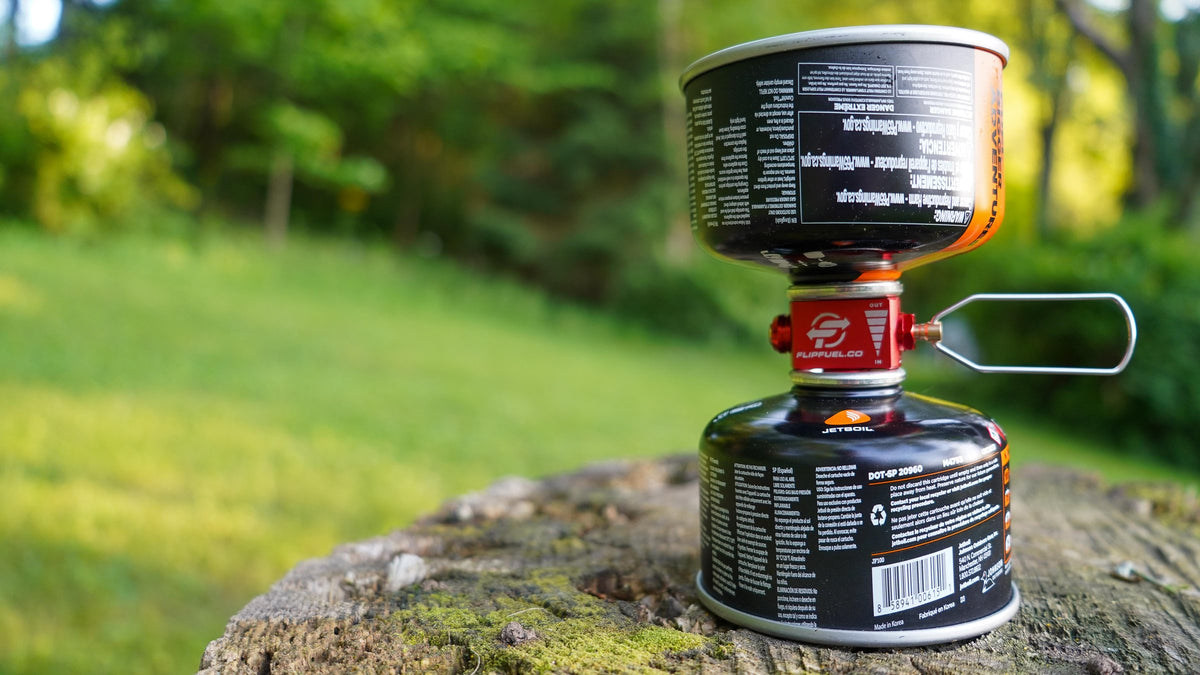
Three steps and about ten minutes. No pump, no power.
The three steps
Fuel moves from the warm canister to the cold one. The bigger the temperature difference, the faster and more complete the transfer.

1. Warm one, chill one
Put the receiving canister somewhere cold: a freezer, an ice chest, a cold stream, snow or cool shade. Put the sending canister in the sun or another warm spot. Wait 10 minutes.
Sun, a pocket or your hands are warm enough. Never use a flame, stove or heater.
2. Thread both canisters on
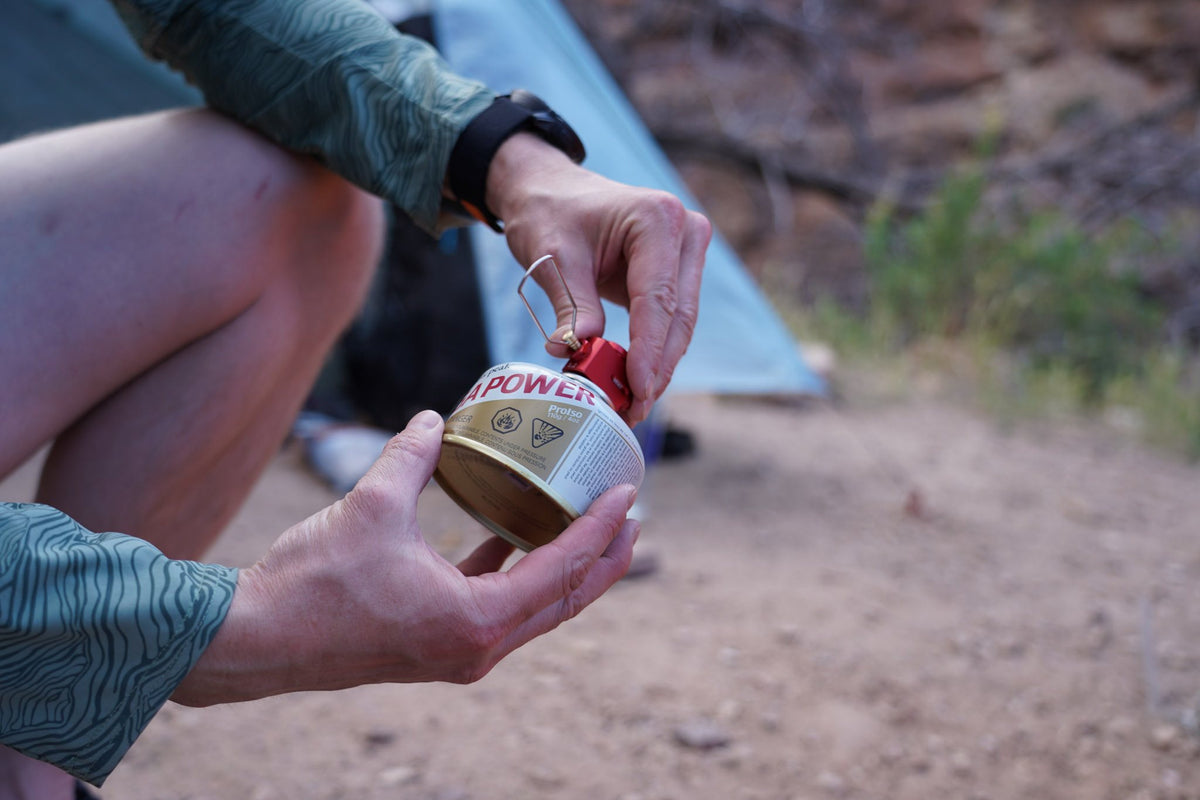
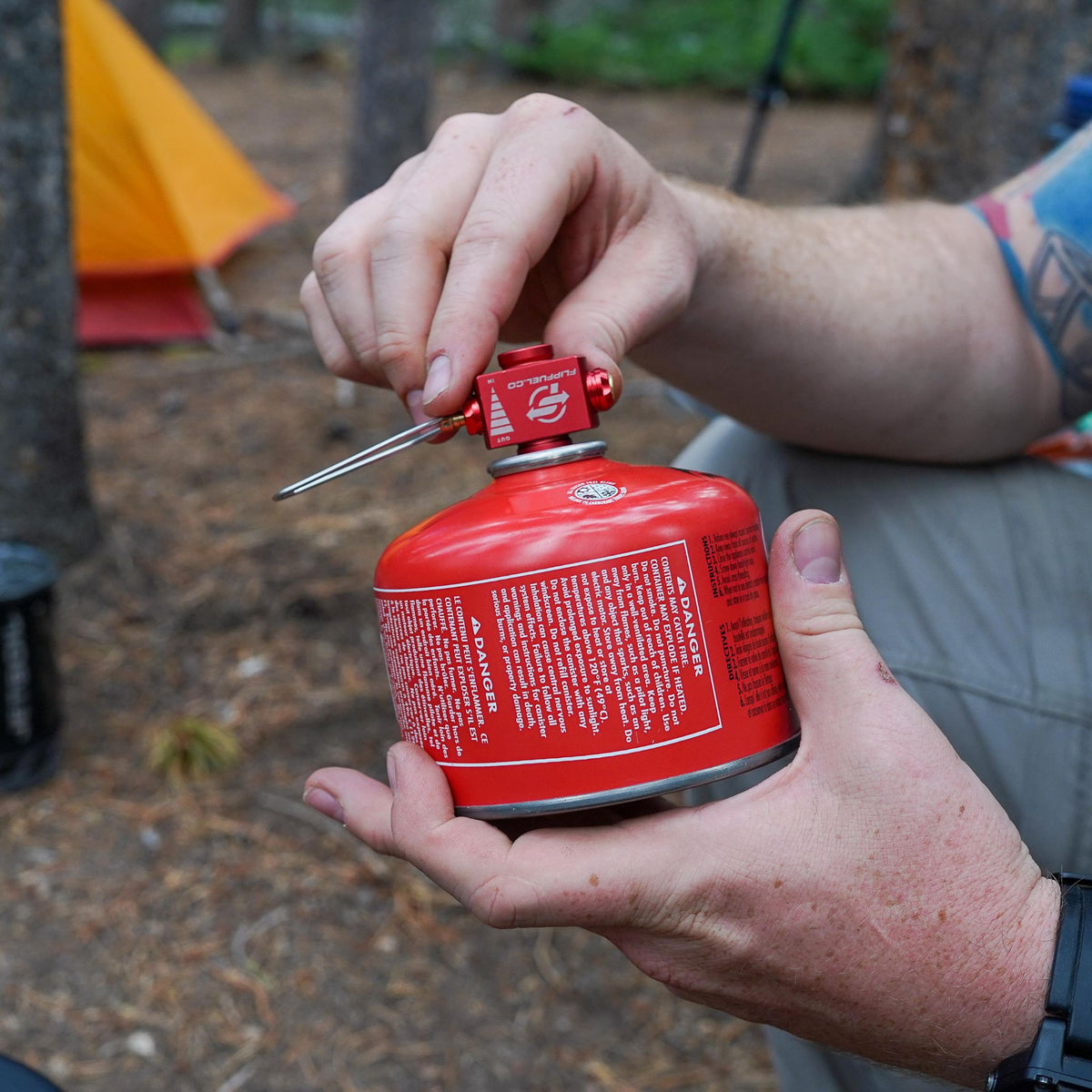
The sending canister goes on top, on the side marked OUT. The receiving canister goes on the bottom, on the side marked IN.
Hand tighten only, and take care not to cross-thread.
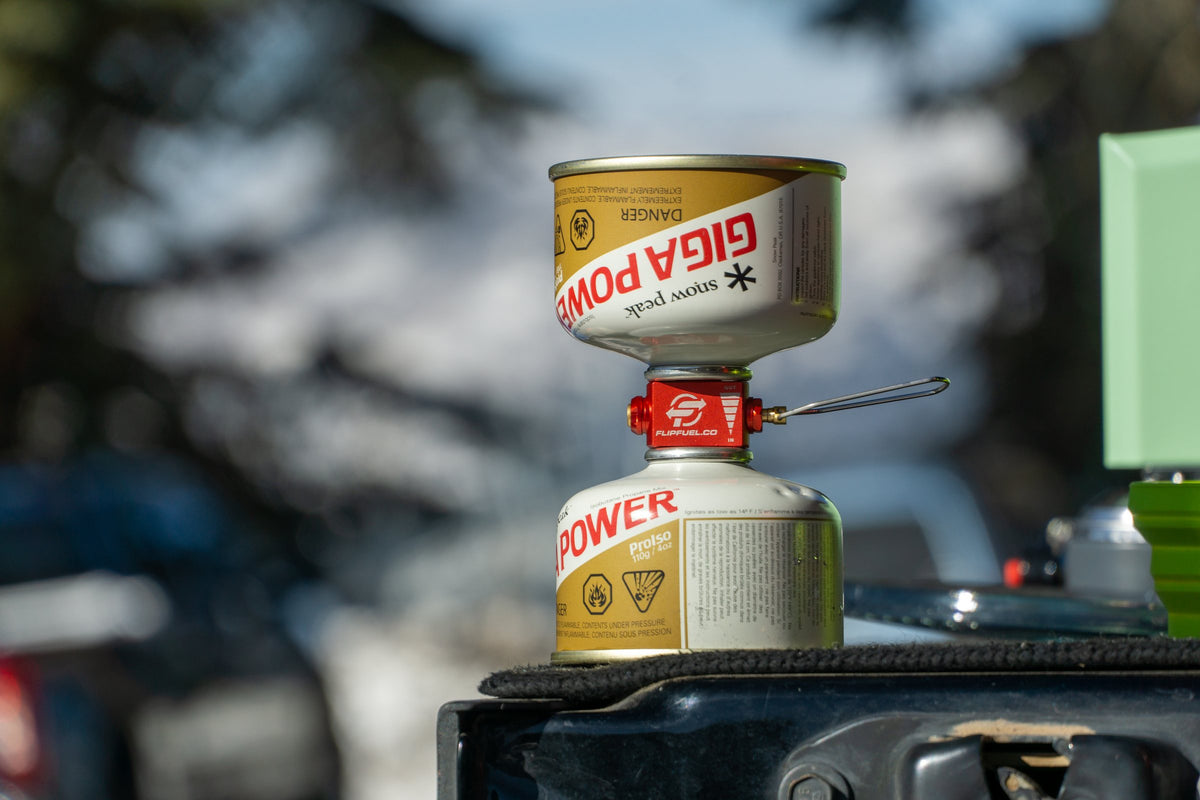
3. Open the valve
You will hear the fuel moving. When the sound stops, close the valve and unthread both canisters.
Weigh the canister you filled. Never go past its original full weight.
Won't it just equalize?
It's the question we hear most: connect two canisters and you end up with two half-full ones. With compressed air that would be true. With canister fuel it isn't, and here is why.
A fuel canister holds liquid, not compressed gas. The pressure inside comes from that liquid's temperature, not from how much of it is left. A nearly empty canister and a full one at the same temperature sit at close to the same pressure.
So you create the difference yourself. Warm the sending canister and its pressure rises. Chill the receiving canister and its pressure drops. Open the valve and the warm canister pushes its liquid down into the cold one.
It runs until the top canister is empty, not until the levels match. Fuel keeps moving as long as the top canister is warmer than the bottom one. If the flow slows with a little left, close the valve, warm and chill again, and repeat.
Skip the temperature step and very little moves. That is the whole trick, and it is why the chill comes first.
What customers measured
From customer reviews by people who weighed their canisters or timed the transfer.
Jeffrey A.
Waited 5 minutes, screwed the cans onto the flip fuel device and within 20 seconds the top canister was empty and the contents were transferred.
Hugh O.
I was able to get almost all gas out of a half full 8 oz container into another half full container by going through the process twice. […] Ended up with 0.25 oz and 7.75 oz in the two cans.
Adam A.
Transfer is fast and effective until last 5 grams or so of fuel, which takes a couple cycles of warming and very cold receiving can to coax out. Had < 1g of fuel left in sending cans.
Kyle F.
Was skeptical of this thing but it actually does work. I was able to consolidate all of my half empty’s into full cans.
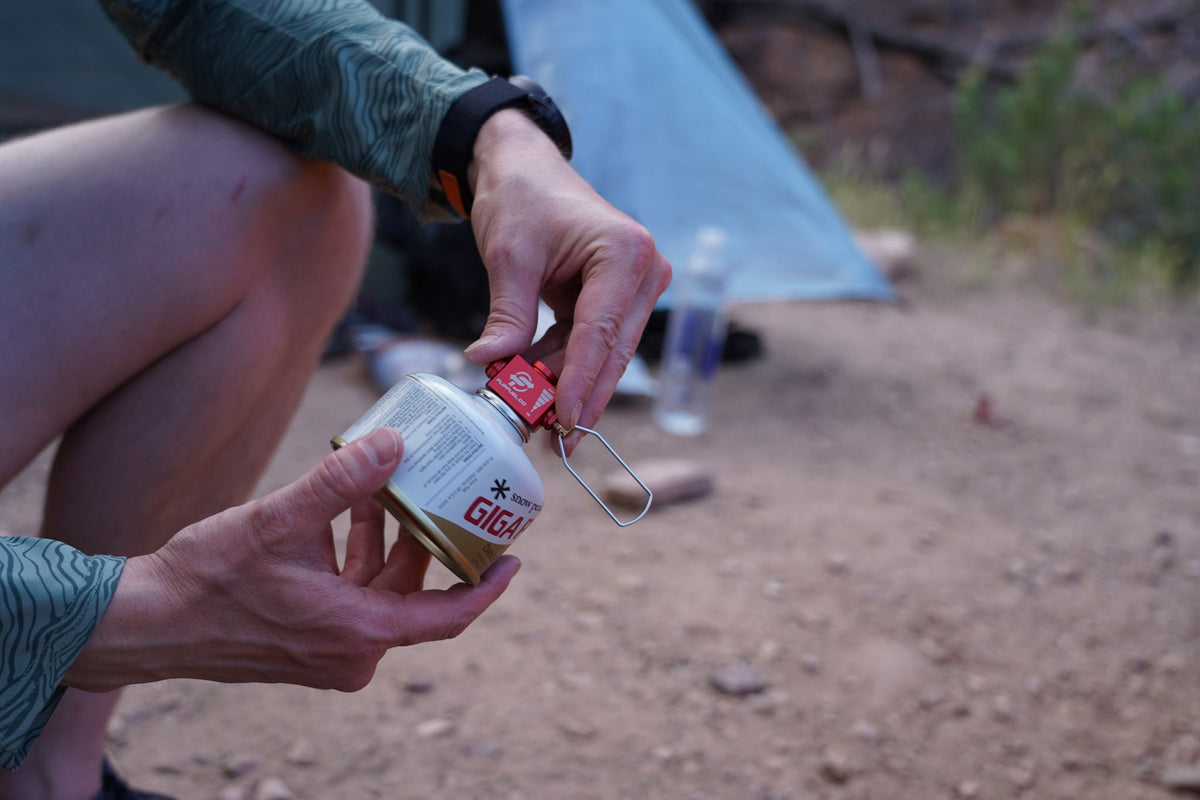
Watch a transfer in 45 seconds

An independent test
Bikepacking.com put the device through its paces. Their nine-minute video covers real-world use and safety in detail.
Read their reviewGetting it right
Still stuck? Send us a message and we will help.
The fuel stopped moving before the top canister was empty
The two canisters have reached the same temperature. As fuel moves, the sending canister cools and the receiving one warms, so the flow slows near the end. Close the valve, warm the top canister and chill the bottom one again, then reopen. One or two rounds gets the last few grams.
How do I avoid overfilling?
Know the full weight of the canister you are filling. Weigh a new one of the same brand and size before you use it and write the number on the bottom. Then weigh as you fill and stop when you reach it. Opening the valve in short bursts makes it easy to stop on target. A small digital scale is all you need.
How do I get a temperature difference on the trail?
Set the receiving canister in a stream, in snow or in deep shade. Warm the sending canister in the sun, in your hands or inside your jacket. Even a modest difference works; a bigger one is faster.
Which canisters does it work with?
Most threaded isobutane canisters made for backpacking stoves, in any size. Only transfer between canisters of the same fuel type. It does not fit the larger green propane tanks.
What do I do with the empties?
Once a canister is completely empty, puncture it and recycle it according to your local rules. A recycle tool makes that easy.
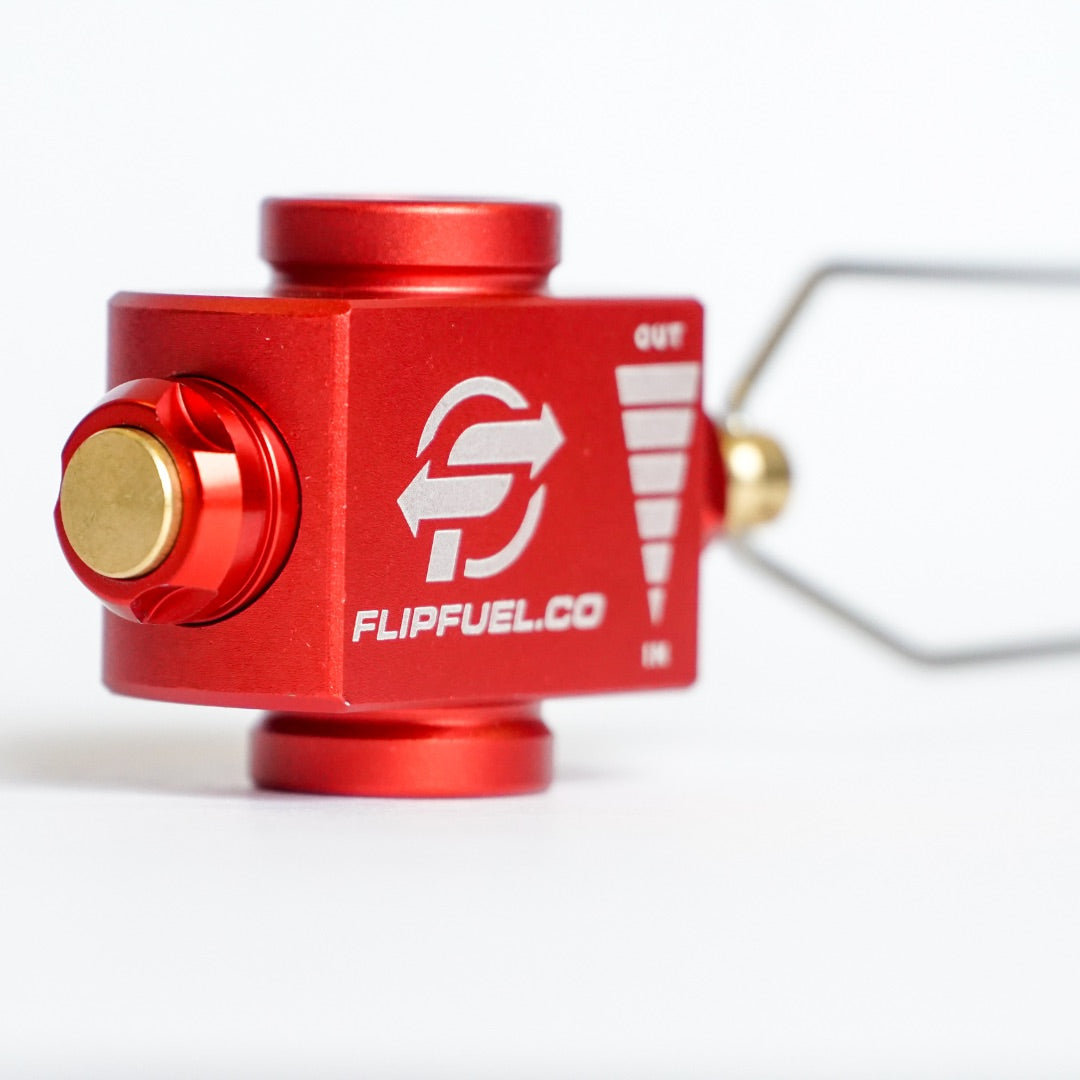
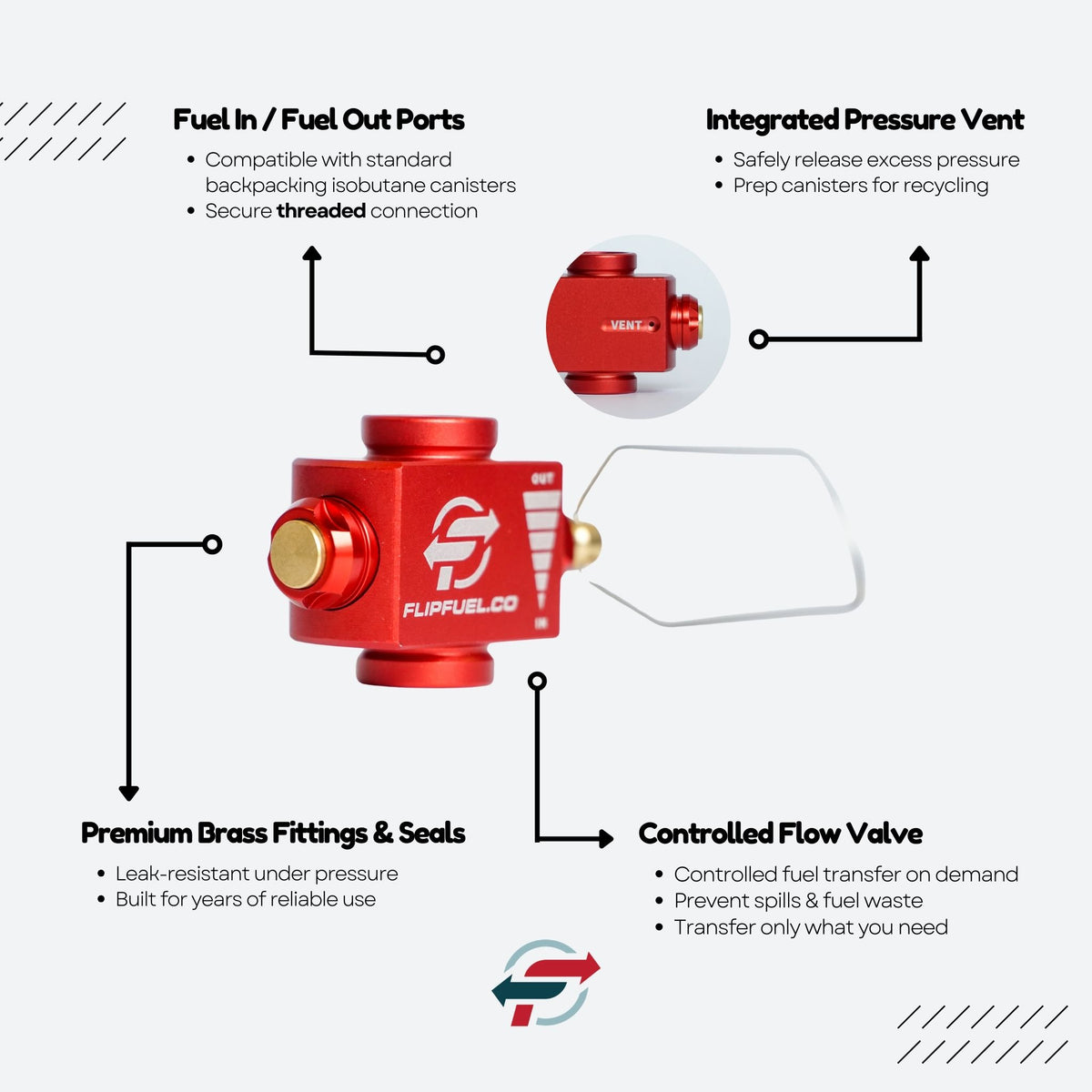
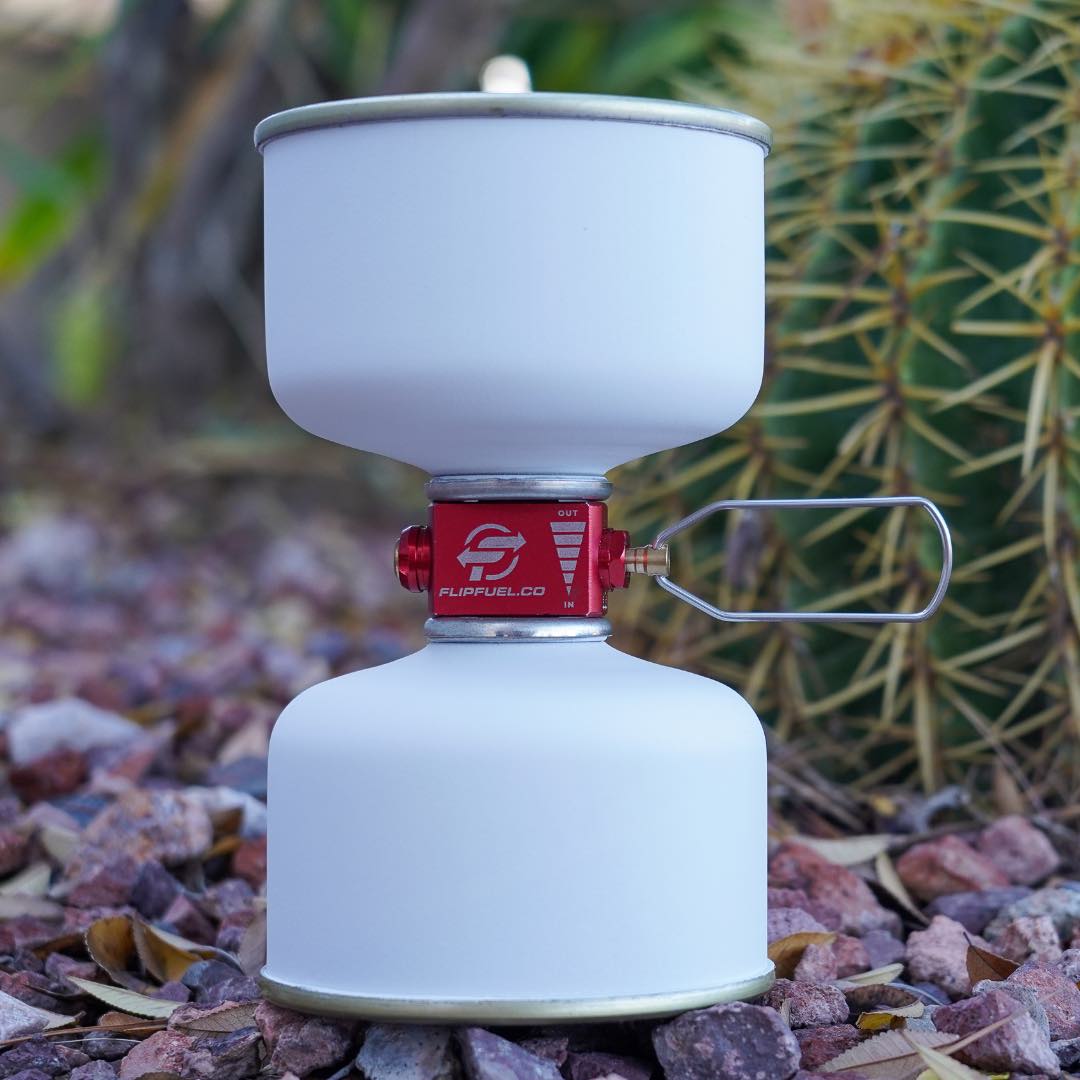
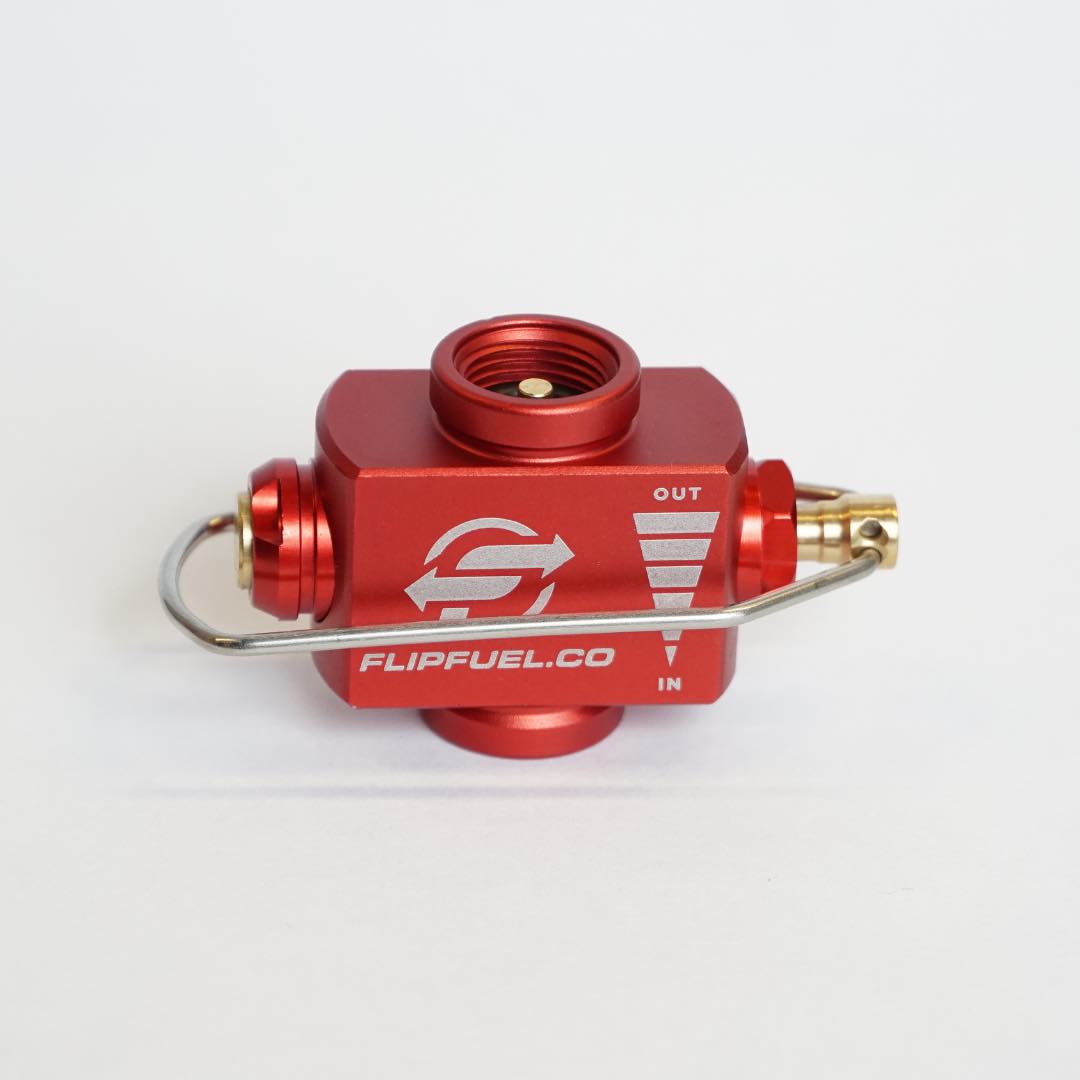
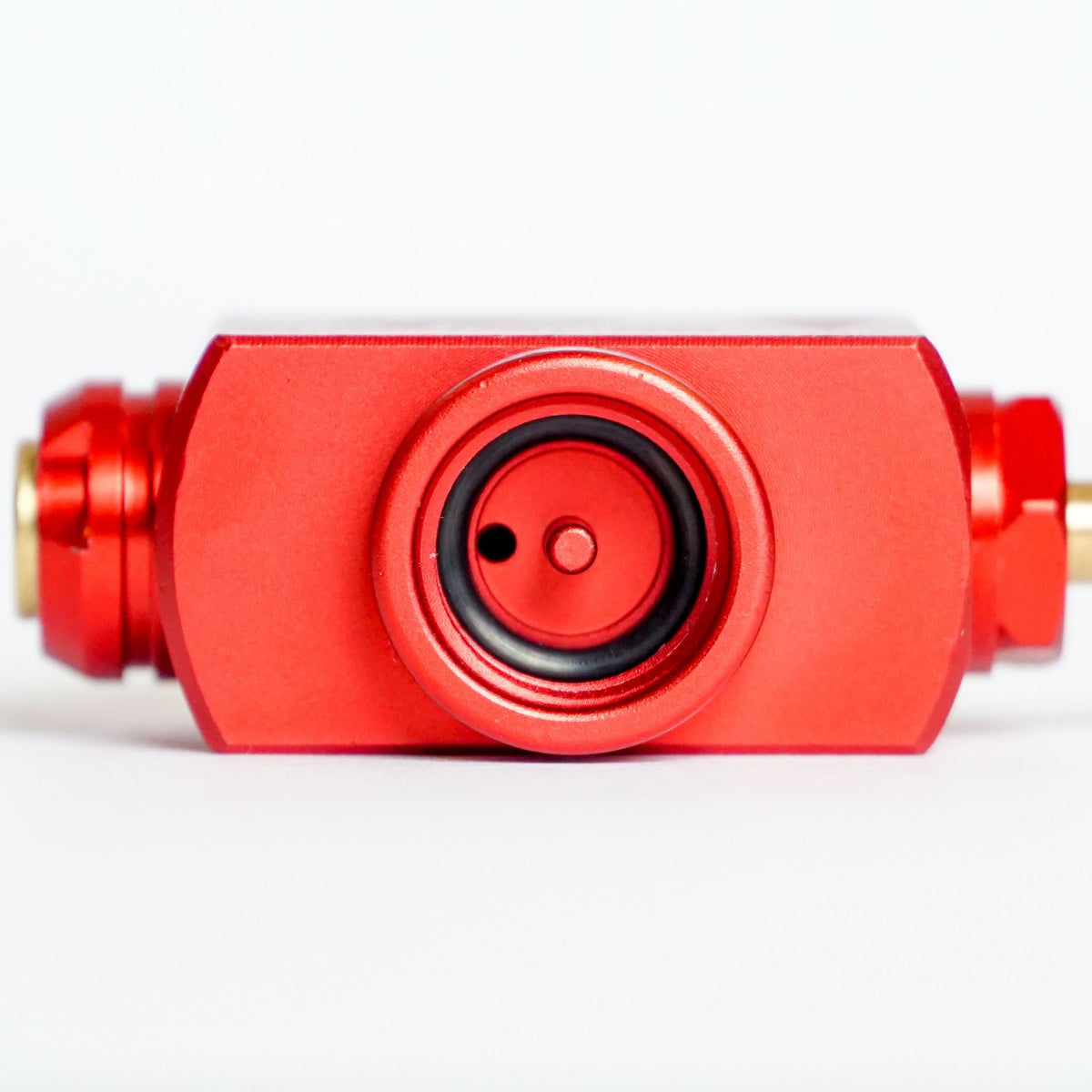
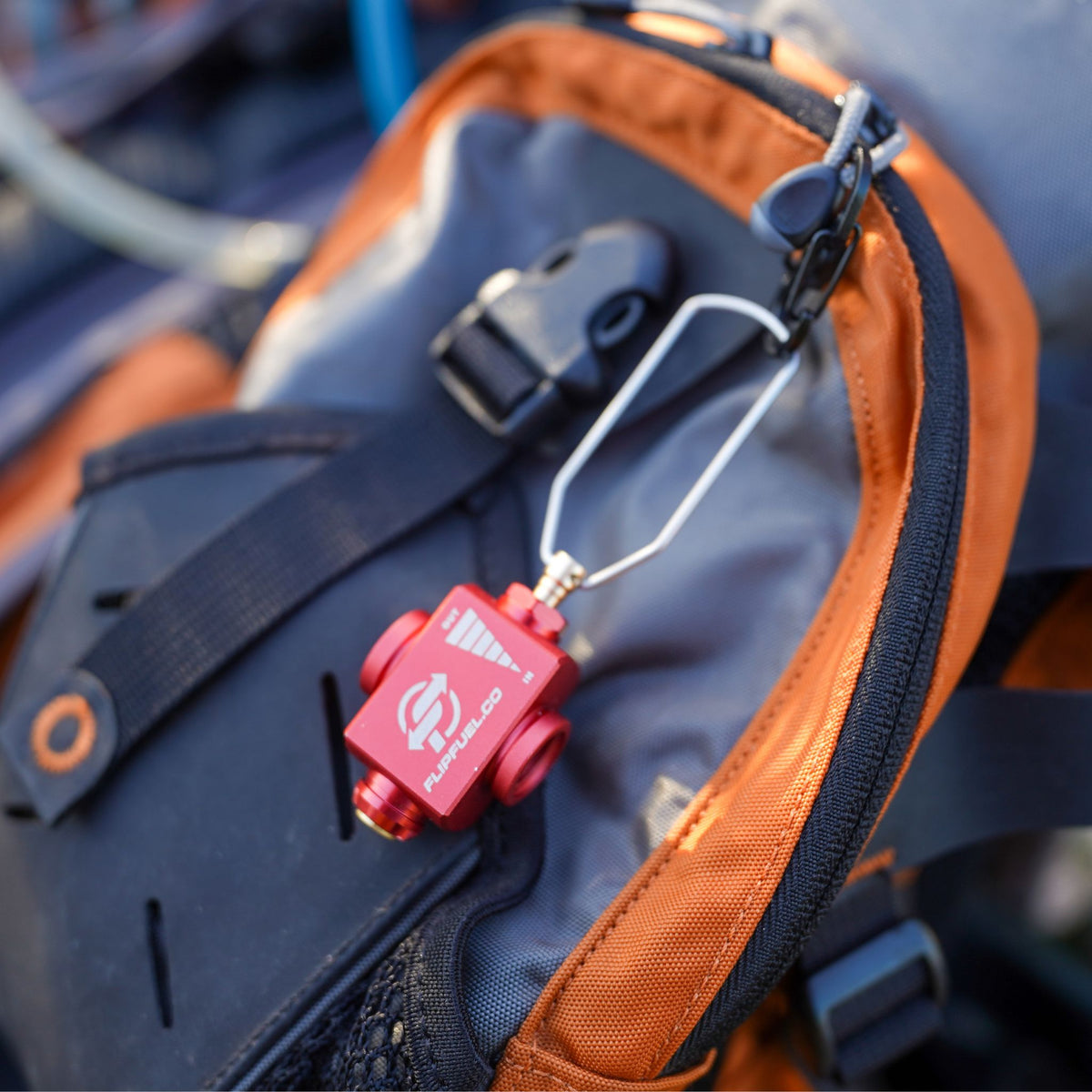
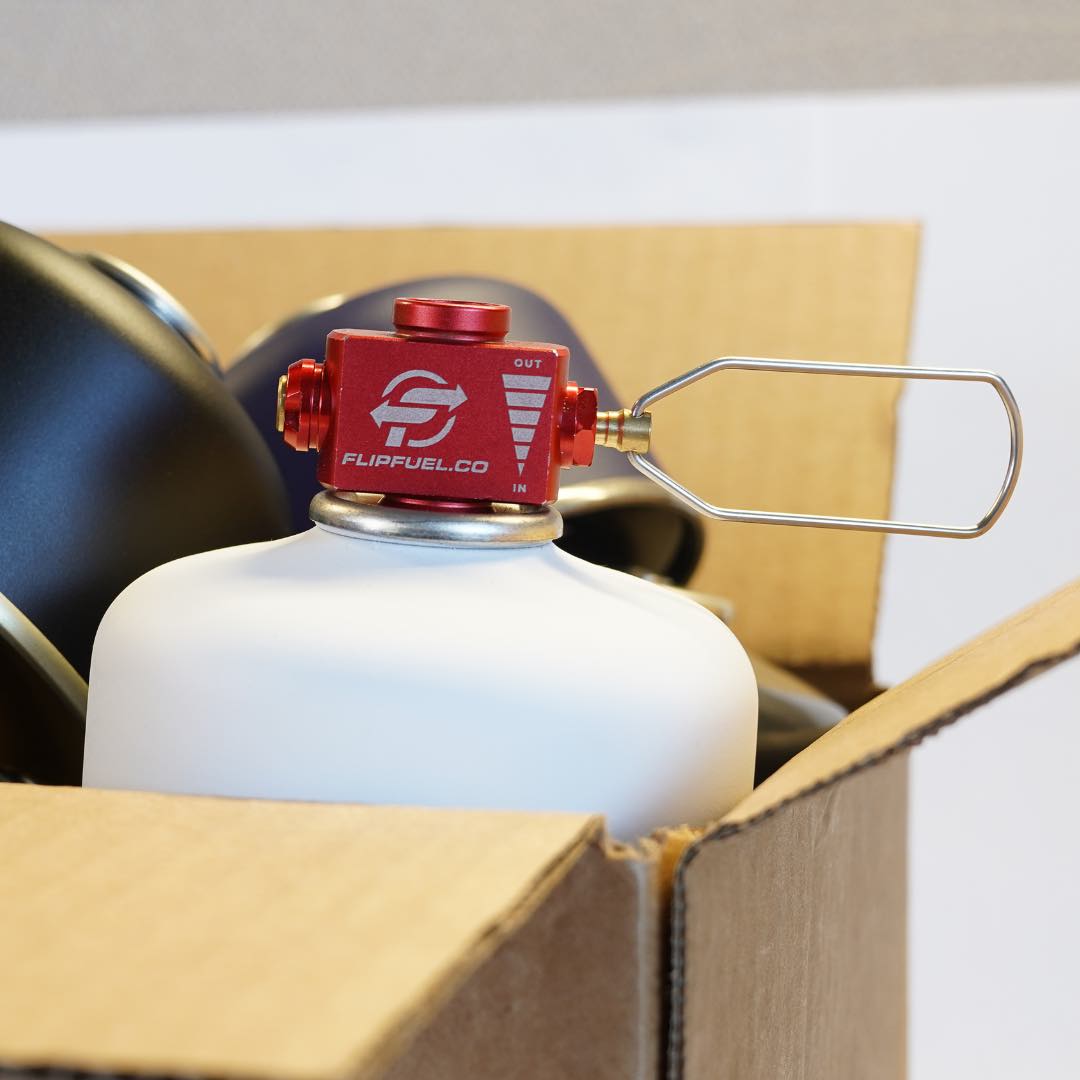
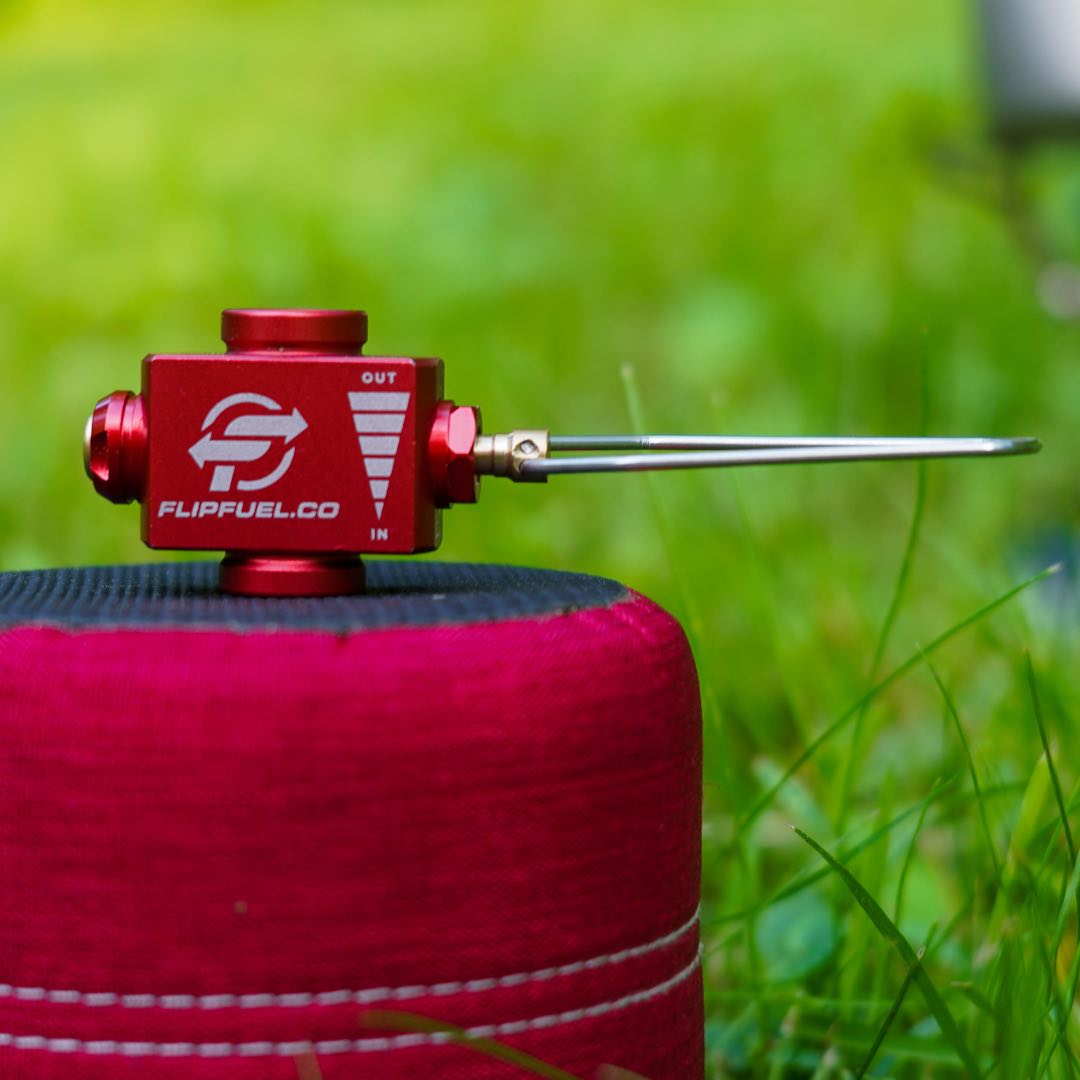
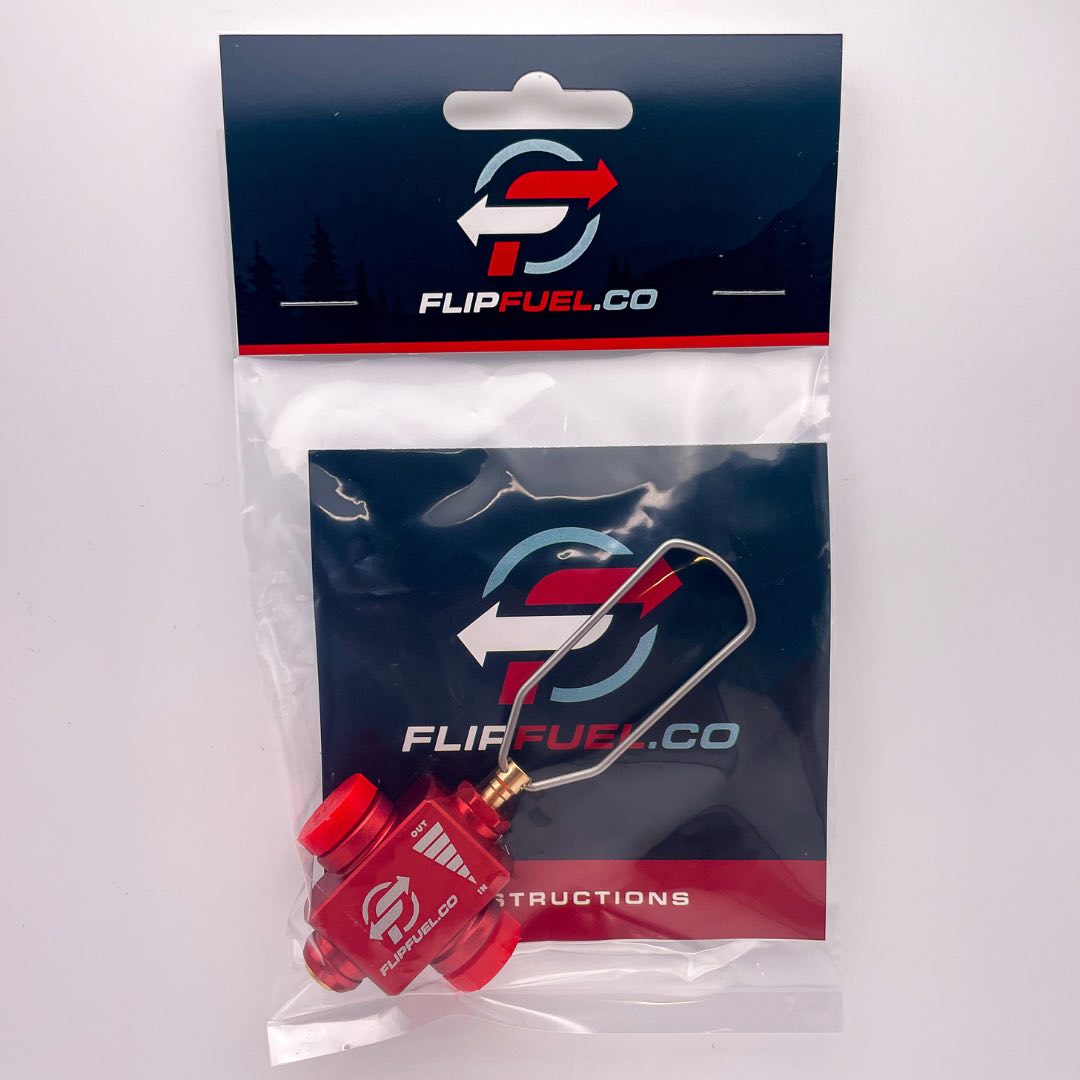
Move isobutane from one backpacking canister to another. Combine your partial canisters into full ones and top off before every trip. 39.7 grams, aluminum and brass, backed by a replacement guarantee.
The discount is applied in your cart.
With two devices, or $54 USD or more.